

Back to School, Big Feelings: A Play Therapist’s Guide to Easing the Transition
Child-Centered, psychodynamic play therapy in Chicago
An air of change can be felt every mid to late August. Backpacks appear by the door. Alarms get reset. And underneath all the logistics, something quieter is happening in your child’s inner world: an ending and a beginning all at once.
As a play therapist, back to school season shows up in the playroom every year; for all kids, regardless of age. A kindergartner buries a small figure in the sand and digs it back up, over and over. A 10-year-old builds an elaborate blanket fort and won’t let anyone in. A teenager suddenly wants to talk about a friendship that ended two years ago. These aren’t random. They’re the psyche’s way of rehearsing separation, loss and change before it happens for real.
Here’s what I want parents and caregivers to keep in mind: your child’s back-to-school-behavior: the clinginess, the meltdowns, the sudden regression, the irritability, is not misbehavior. It’s communication. Below are five tips and five books to help you and your find language for this transition.
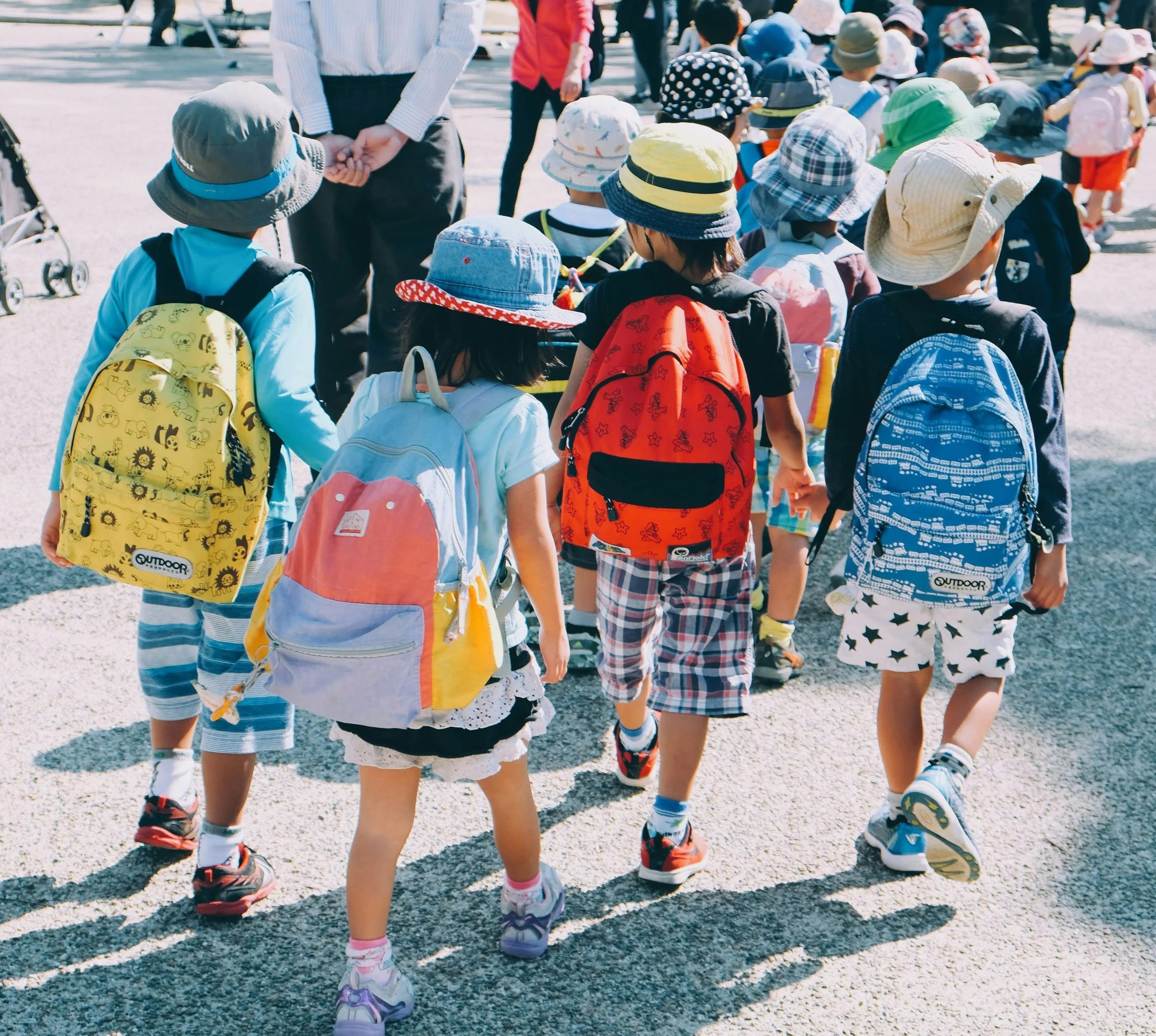
5 Tips for Supporting Kids During Back-to-School
1) Expect regression & don’t take it personally
It’s common for children to temporarily regress during any type of transition. A seven-year-old who suddenly wants to be carried, a middle schooler who becomes uncharacteristically whiny, or babyish. We understand regression as the minds way of reaching for an earlier, safer developmental foothold before it takes a leap forward. Rather than correcting or shaming, try meeting it with warmth, or naming it without judgment, “Seems like part of you wants to feel like my little kid right now.”
2) Make space for the goodbye, not just the hello
We tend to focus so much energy on the first day: new clothes, new supplies, new classrooms. But every back-to-school-season is all a goodbye: to days at the pool, camp friends, a beloved teacher, to the version of themselves your kiddo was in June. Give the ending the attention it deserves. Ask, “what are you going to miss about summer?” or “What did you really like about last year’s class?” Grief that gets acknowledged moves through your child; grief that gets skipped tends to resurface sideways–as irritability, stomachs, or sleep trouble.
3) Let play do the talking
Direct questions, especially for younger children, and sometimes tweens and teens, can shut down a conversation. Play, art, and story open it back up. Offer open-ended materials: blank paper, small figures, playdough, or even just narrating stuffed animals “first day” together. You don’t need to interpret or fix what emerges. Stay curious and present. A child who buries and rescues a toy for fifteen minutes is working through something––let them!
4) Hold the anxiety without absorbing it
Children borrow their caregivers’ nervous systems to regulate their own. If you’re anxious about the transition they will feel it, even if you don’t say a word. This doesn’t mean pretending you feel nothing. It means tending to your own feelings about the transition (with a partner, friend, journal, or your own therapist) so you can offer your child a calm, steady, presence rather than an anxious mirror.
5) Trust the slow return to baseline
Most transition related distress: tears at drop-off, fights over morning routine, Sunday night scaries ease within the first few weeks as a child’s nervous system adjusts to new rhythms, relationships, and expectations. Resist the urge to over correct or over explain. Consistent routines, predictable goodbyes, and listening do more for long-term good than reassurance alone. If the distress is intense, persistent beyond a few weeks, or interferes significantly with daily functioning, that’s a good time to connect with a child therapist.
5 Books to Help Kids Process the Back-to-School Transition
Books offer children something a conversation can’t. A character to stand in for them, at a safe, emotional distance. Here are five go-to’s from the playroom shelf.
1) The Kissing Hand by Audrey Penn (ages 3-7) Chester the raccoon doesn’t want to leave his mother for school. A gentle, classic story about carrying love and the connection with you, even during separation.
2) First Day Jitters by Julie Danneberg (ages 4-8) A nervous character who doesn’t want to go to school turns out, in a fun twist, to be the new teacher. A warm reminder that big feelings about new beginnings don’t disappear with age.
3) Wembley Worried by Kevin Henkes (ages 4-7) Wembley worries about everything, especially starting school. The story validates anxious feelings without rushing to erase them, and shows how connection with others can ease worry over time.
4) The Invisible String by Patrice Karst (ages 4-10) Less about the first day especially and more about the ache of separation itself, this book offers children a felt sense of connection to loved ones when apart. Useful for school drop-offs, but also for any separation.
5) Middle School: The Worst Years of My Life by James Patterson & Chris Tebbetts (ages 9-13) For older kids navigation the bigger social and emotional terrain of middle school, this funny, irreverent series lets tweens laugh at the awkwardness rather than feel alone in it.
One last thing…
Transitions ask something of children and teens psychologically that we don’t always name: to tolerate uncertainty, to mourn what’s ending, and to trust that new relationships and routines can hold them. That’s a lot of internal work for a six-year-old or 14-year-old. Your patience, curiosity,, and steady presence are the container that makes that work possible.
If your child’s back-to-school distress feels bigger than the season can explain, or if it’s not easing with time and support, Chicago Therapy Corner is here for you. We’d love to help your family find its footing this fall.
Chicago Therapy Corner offers child-centered, psychodynamic play therapy for children and teens ages 3 to 16 across Chicago. Reach out to learn more about how play therapy can help support your child through transition, anxiety and big feelings.