

What to Say to Your Child When They're Starting Therapy
A getting started guide from Chicago Therapy Corner, serving families in Logan Square, Avondale, Albany Park, Portage Park, and across Chicago's West and Northwest Side
If you've just scheduled your child's first therapy appointment, you might be wrestling with a surprisingly hard question: What do I even tell them?
As a Child-Centered Play Therapist, I hear this from parents all the time. The good news is that you don't need a perfect script. Kids don't need a long explanation. They need honesty, warmth, and reassurance that this is a safe, regular thing to do.
Here's how I encourage the families I work with, many of them right here in Logan Square, Avondale, Albany Park, and Portage Park, to talk with their kids about starting therapy.
Keep It Simple and Honest
You don't need to explain the clinical details of play therapy or unpack every reason you're seeking support. Young children especially do best with short, concrete language. Something like:
“You're going to start seeing someone named [therapist's name]. It's a special place with toys and games where you get to talk about your feelings, or just play. A lot of kids go, and it's not because anything is wrong with you — it's a place just for you."
For older kids or tweens, you can be a bit more direct:
"I've noticed things have felt harder lately––at school, at home, with friends. I found someone who’s here to help you work through stuff like that. It's totally common, and a lot of people your age go too."
Notice what's not in either script: blame, big medical words, or an explanation of every problem you hope therapy will fix. Kids don't need the whole backstory. They need to know where they're going, why, and that it's safe.
Name the Feelings Without Fixing Them in Advance
It makes sense for kids to feel nervous, confused, or even a little embarrassed about starting therapy. Rather than talking them out of those feelings, try naming them:
"It’s okay to feel nervous about something new. A lot of kids feel that way at first."
This does two things: it validates your child's experience, and it models exactly what child-centered play therapy is all about––a space where all feelings are allowed and welcomed, not corrected.
Avoid Framing It as Punishment or "Fixing" Them
One of the most important things a parent can do is separate therapy from discipline. Avoid phrases like "maybe this will help you behave better" or "we need to fix your attitude." Even well-intentioned comments like this can make a child feel like therapy is a consequence rather than a resource.
Instead, frame therapy as something for them. A space that belongs to them, where they're not in trouble, and nothing they say or play out will get them in trouble either.
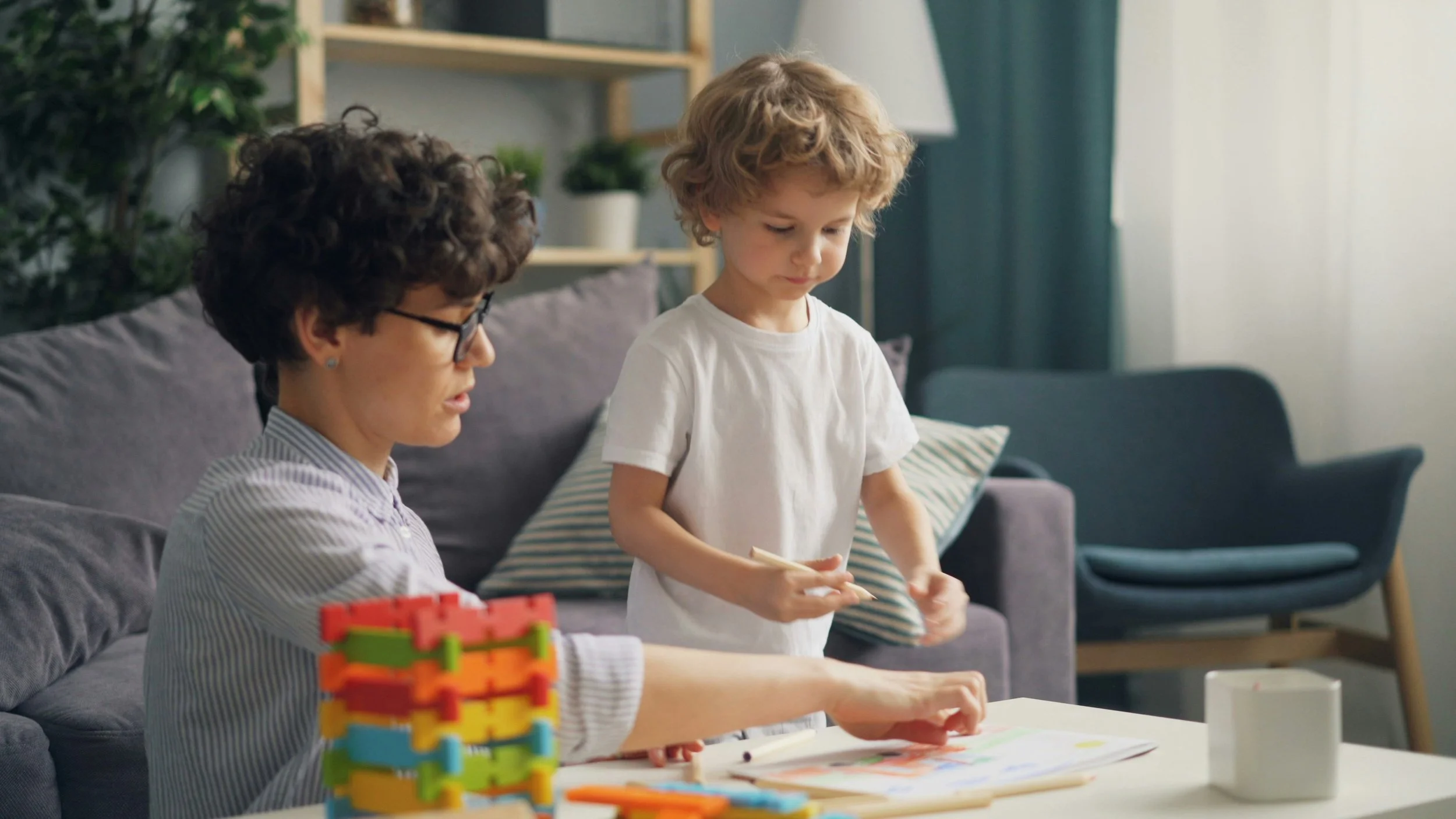
Let Them Know What to Expect (Loosely)
You don't need to describe the playroom in detail, but a little bit of context goes a long way in reducing first-session jitters:
- There will be toys, games, art supplies, or sand trays.
- They get to choose what to do during their time.
- The therapist won't force them to talk about anything they don't want to.
- You'll likely be in the waiting room or nearby, not in the session room.
Many parents in our Avondale and Logan Square families tell me this last point is the one kids ask about most: "Will you be there?" Knowing the shape of the visit, even loosely, helps children walk in feeling more grounded.
Reassure Them It's Not a One-Time Fix and That's Okay
Especially with younger children, therapy can feel confusing if they expect one visit to "solve" whatever is going on. Let them know it's something they'll do regularly, like a check-in, not a one-time event:
"You'll get to go every week for a while. It's kind of like your own special time to play and talk about whatever's on your mind."
A Note for Parents in Logan Square, Avondale, Albany Park, and Portage Park
Chicago Therapy Corner works with families throughout the city's West and Northwest Side neighborhoods, and we know that starting therapy can feel like a big step, for parents just as much as for kids. Our goal is to make that first visit feel less like an unknown and more like the beginning of something genuinely helpful.
Child-centered play therapy meets kids where they are; using play, the natural language of childhood, to help them process emotions, build coping skills, and feel understood. You don't have to have all the answers before your child's first session. You just have to help them feel safe walking through the door.
If your family is considering therapy and you're not sure how to start the conversation at home, reach out to Chicago Therapy Corner. We're happy to talk through what to expect before your child ever sets foot in the playroom.